Homosexual Law Reform 40 years on
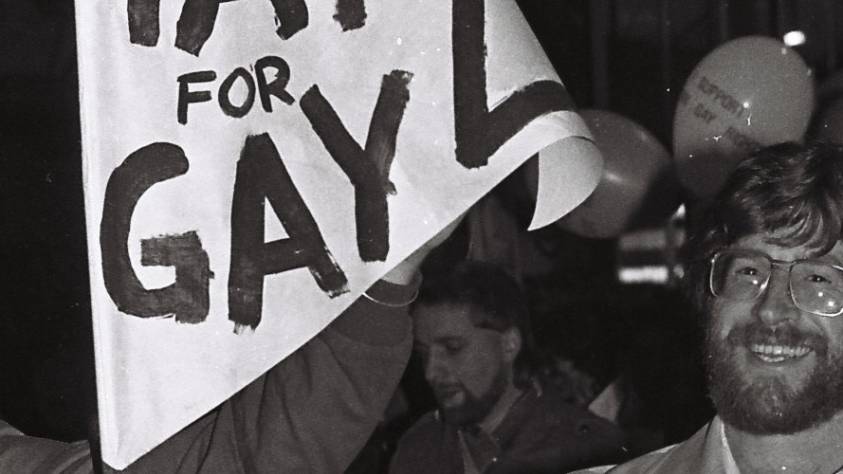
It’s difficult to believe that not too long ago, it was illegal for gay men to be what was described as “actively homosexual.”

Legislation meant homosexual acts between consenting men were punishable by penalties of up to five years in jail; and the illegality of being gay allowed discrimination in employment, housing, and health to occur with impunity.
In this issue of LawTalk, we speak with seven legal professionals who consider the impact of this reform and why it still matters 40 years on.
There had been earlier attempts by gay action groups (and MPs) to overturn the law, but it took Wellington MP Fran Wilde backing the call from the campaigners to amend the Crimes Act 1961 to get the reform moving.
In 1984, discussions among the Auckland Task Force, Christchurch Gay Task Force, and Fran shaped a new bill with the support of politicians, members of the legal fraternity and the gay and lesbian communities.
The New Zealand Law Society’s well-received submissions on the Homosexual Law Reform were soon to follow and did not express a view on the desirability of the reform.
However, the bill was not without its detractors who ensured that morality was front and centre. An aggressive and very public petition against the bill was led by Norm Jones and other MPs who were working with fundamentalist figures and religious organisations to stymy any reform to the law. But the often vitriolic, attacking tone of the campaign simply served to galvanise and energise the reformers, prompting extensive mobilisation and growing public support.
Lawyers Don McMorland and Alan Ivory were part of the Auckland Taskforce and co-crafted the original amendments to legislation, after joining forces with Peter Wall, Bruce Kilminster, John Hughes, and James Peters.
Don says he didn’t think about how being on the taskforce might impact him professionally because it was something that “simply needed to be done”. He and Alan had been discussing legislation change since the late 60s and once the reform looked like a possible reality, they saw it as their responsibility to contribute.
A young law firm partner named Matthew Muir (who would become New Zealand’s first openly gay High Court Judge) assisted the taskforce after the bill had been tabled and began to help gay people with legal issues resulting from personal anti-reform retribution.

“The public profile of the campaign and taskforce was so high that many of the campaigners became targets. Some taskforce members became sounding boards for the gay community. I was also reasonably well connected with the centre right in New Zealand politics. I knew a number of those MPs, so I did a lot of campaigning. From memory, it was ultimately three or four National Party votes that got the bill through.”
Lawyer and former Attorney General Chris Finlayson recalls a lot of “noise” around the campaign. He thinks the issue was very simple – “there is a distinction to be noted between matters of public morality (when the state has a duty to legislate) and matters of private morality where the state has no role”. Chris thought former Canadian Prime Minister, Pierre Trudeau had put it well when he famously said, “there’s no place for the state in the bedrooms of the nation”.
Perhaps surprisingly, Justice Muir says Labour contained some strong opponents of the legislation too, like Geoff Braybrooke and Whetu Tirikatene-Sullivan. But while lobbying often occurred in a hostile environment, the campaigners also found there was fun to be had disrupting the anti-reform petitions.
“We would stand in Queen Street every Friday night. I was a young, smartly dressed lawyer, so they never thought for a moment that I was an opponent. And tying them up in knots for long discussions meant they couldn’t get a single signature.”
He describes the campaign as an engaging and energising time for the gay community but put the vital shift in public opinion down to the taskforce’s professional and measured approach.
“It had to be measured, to contrast with the behaviour of the other side. If you look at how the public broke on this issue in the beginning, and where it ended up on the eve of the Parliamentary vote, there was a significant shift in public opinion towards the reform by about 20 percent. If there hadn’t been that movement, the vote would not have succeeded.”
On a personal level, Justice Muir says as an out partner of a law firm, he was largely insulated but the fear of being exposed for many men was very real.
“There were very few lawyers prepared to identify with this cause. Many thought that it would imperil their professional careers and many were not out to their families. To participate in the public discourse – you really had to be out which required courage.”
The fear was not about an “imagined truncheon-wielding policemen at the bedroom door” but the shame and career-limiting outcomes of being outed.
“It was about taking your place at the table and the complete inability to do so while that legislation was on the books. I was a partner in a law firm, but let’s be frank, the prospect of ever obtaining silk let alone ending up on the High Court Bench would have been zero.”
He says that younger colleagues often react with stunned incredulity when hearing about this time.
Otago University Vice Chancellor and ex-MP Grant Robertson recalls the courage of the gay community during the campaign and how it led to wider support.
“It remains one of the most extraordinary moments of the whole campaign – the full-page campaign ad in the New Zealand Herald, signed by gay men. Publicly signing their names when it was still illegal. The courage to do that was probably a big part of helping some New Zealanders say, “Okay, I actually know somebody on that list ... and I don’t want them to be criminalised or discriminated against.”

Grant is unequivocal that the success of law reform enabled people like him to build the kind of career and life he has. He has no doubt that he would not have been able to have his political career had the reform failed.
“My generation of gay and lesbian and transgender folk have been carried along by those who did that work in the ‘80s. Fran, of course, but also others who were important in the background of making it work. The brave politicians who followed, who came out.”
He points out the campaign success laid the foundation for later changes such as civil unions, marriage equality, and more diverse political representation.
“Obviously it was a super important piece of legislation and campaign, but what we don’t talk about a lot, is how important it was for opening those other doors. It allowed the whole queer community to engage and turn up fully.”
Barrister and Auckland Rainbow Law convenor David Friar agrees, saying his generation and those that followed stand on the shoulders of the activists who fought for Homosexual Law Reform.
“It really is a pivotal moment in the history of LGBTQI+ rights in New Zealand. I think today we sometimes take it for granted that you should be able to love whoever you want.

In his early teens during the reform, this didn’t truly hit home for David until he came out in the 1990s which he adds “was still not an easy time to come out in New Zealand”.
“I could only imagine what it must have been like for those people, 15 years earlier who had not only come out, but fought publicly for this reform,” says David.
“I was grateful but also in awe of the courage. Today it’s easy to forget the campaign of vitriol, the hate and abuse campaigners had to endure. And we need to remember there was no anti-discrimination law. They put so much at risk to fight for what was right. We all need to remember and recognise just how hard it was for them to do that.”
David believes legal professionals can learn a lot from the Homosexual Law Reform and consider how their skills as lawyers allow them to fight for a better world and make a difference.
Principal at Tamatekapua Law, Prue Kapua recalls the decade of the reform as being one filled with political activism. The Te Reo petition, the nuclear-free and the anti-apartheid movements, to name but a few, were around the time of the law reform and the multiple campaigns together created a sense of momentum and change.
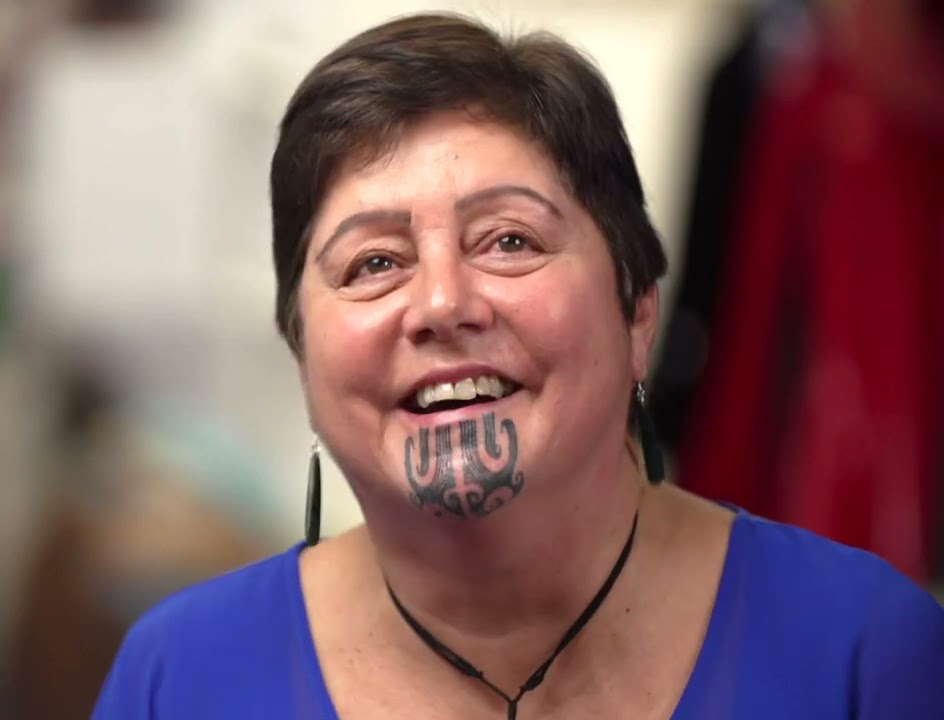
“At the time, there was a definite acknowledgement that changes were happening in society. I recall a very strong force of wāhine Māori, Takatāpui involved in pushing the law reform. They were involved not only in the Māori activism but this issue too. Ngāhuia Te Awa Kōtuku was very staunch about supporting people who were a bit younger to have a voice. There was quite a movement.”
She agrees that the reform in ‘86 absolutely opened the door to legalising same-sex marriage, saying that while her career had always been in the human rights area, her involvement in gay rights began in earnest with the drafting of the Marriage (Definition of Marriage) Amendment Bill, which was introduced by her partner, then Labour MP Louisa Wall.
“The civil union bill that came before same-sex marriage was a little bit of a distraction, if you like, rather than a step towards same-sex marriage. How people behaved in response to civil unions didn’t make it any easier because there was still pretty ugly stuff happening with the marriage equality campaign.”
She says it was interesting that while certain institutional organisations, like the Salvation Army, fiercely opposed the civil union campaign, they were less strident during marriage equality – a shift which Prue puts down to how the bill was framed.
“The focus of the Marriage Amendment Bill was that marriage is a state institution. It’s the state that issues the licences etc, so it shouldn’t be taking a moral position on it.”
Prue says we need to acknowledge that we were the first country in this part of the world to legalise same-sex marriage and that law reform and marriage equality are now “a given” but she points out that there are still parts of the Pacific that criminalise homosexuality.
Solicitor Lavi Abitbol from Dentons Kensington Swan was admitted to the bar in 2023 and says he regards the law reform as an incredibly important part of not just queer history but New Zealand history.

He says that looking back on the Homosexual Law Reform now is quite surprising.
In particular, he is struck by what it was like to be queer back at that time and the extent to which the government had control over what people did in their own homes.
“While there are still residual negative attitudes to queer people, it’s more on a cultural level. In the professional sphere people can now just exist and obviously we are very grateful that the work was done, and we can just be ourselves,” he says.
He feels a comparable legal and social issue for everyone to consider in 2026 is that of intersex rights, as trans and intersex people have tended to be left out of queer rights advocacy in the past.
This is echoed by Solicitor Arela Jiang from Chapman Tripp, who adds that while the law reform excluded trans people it opened the door to pursuing legal rights of transgender and gender diverse people.

“Much as homosexuality was seen as abominable or perverse by the everyday individuals and politicians alike, this same rhetoric surrounds transgender people in the public sphere. Seeing how the Homosexual Law Reform campaign helped humanise homosexuality, one would hope that same treatment would happen with transgender people. The existence of trans people in society makes the wider public look at themselves and face their own intolerance – like a moment of reckoning to see that the sky won’t fall if they choose to love thy neighbour, at the very least, to turn the other cheek and leave us unbothered.”
Arela says that as the reform demonstrates, the law reshapes society and can make us better, more inclusive and respectful people.