Law, labour and dialogue

Wellingtonian Lisa Tortell reflects on her path to the International Labour Organisation, the enduring value of social justice, and why practical, people-centred lawyering still matters on the international stage.

I started writing these short reflections in the margins of the International Labour Conference, as thousands of employers, workers and governments from around the world gathered in Geneva to discuss issues relating to labour and social rights, including the adoption this year of an international convention on decent work in the platform economy.
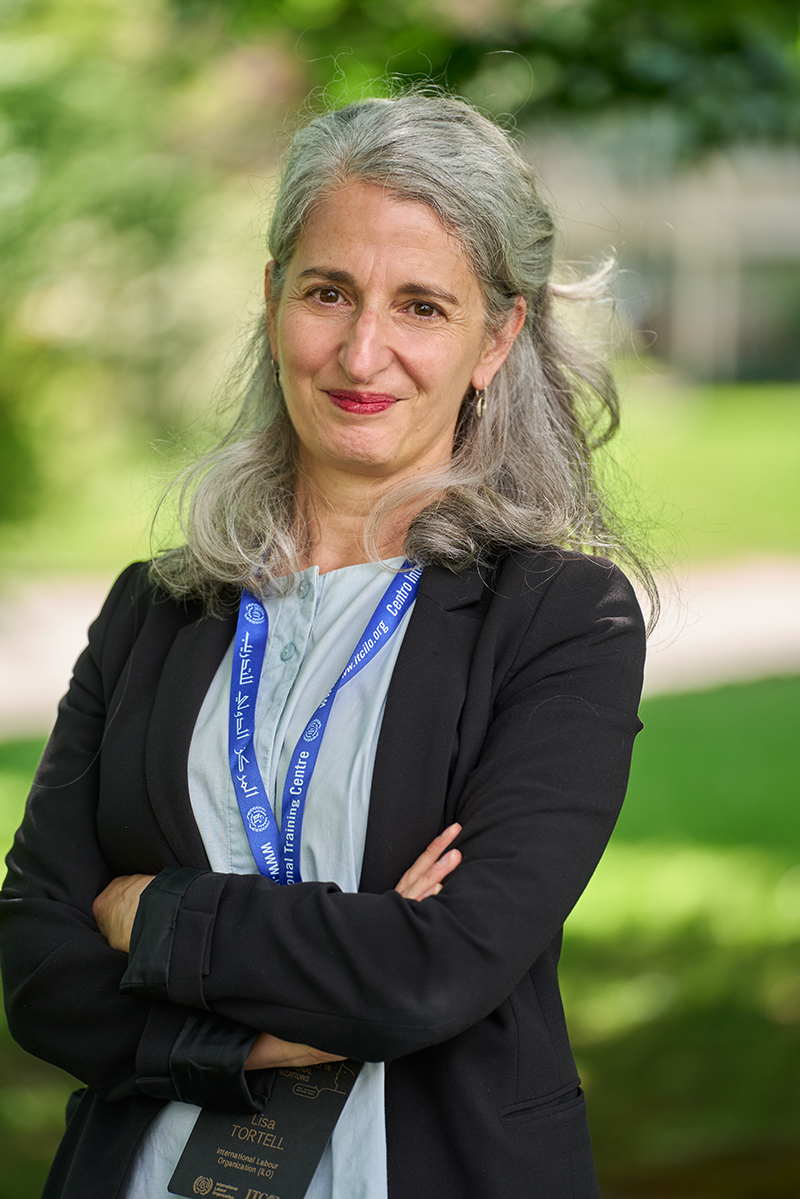
Meeting rooms were filled with the colours of national costumes and a cacophony of languages, amid procedural motions and tough negotiations over the placement of commas or choice of words. My role during these two weeks was to lead the secretariat supporting the Credentials Committee, a technical legal role sitting at the heart of the ILO’s distinctive constitutional structure, ensuring the proper representation of governments, employers and workers in the organisation’s tripartite decision-making.
The Conference epitomises for me the hope attached to the notion that dialogue among the people concerned is the best way to come up with creative yet grounded ways forward. It is a privilege to be part of the secretariat supporting this notion.
Reflecting on these questions, I realise that a lot of who I am as a lawyer comes back to where I come from: I remain very much a New Zealand lawyer and the very Kiwi qualities of personal engagement and a focus on solutions are useful in an international organisation built on dialogue and consensus.
Equality and a sense of responsibility to act have always resonated with me – values that come from my family and that I think many New Zealanders share. At university and beyond, I have benefited from inspiring teachers, mentors, colleagues and friends who challenged me to think about the role of law in society.
I did not set out intending to specialise in international labour law, but my interest has been held by the way it brings together human rights, regulation and the relationships between people. Work is a defining relationship for most of us and shapes our sense of self. It is an area of law where abstract principles directly affect people’s lives while providing the building blocks for social change: as the ILO Constitution states, “universal and lasting peace can be established only if it is based upon social justice”.
I’ve tended to follow opportunities where my curiosity leads. Joining the ILO was largely a matter of chance: when a friend told me about a short-term opportunity in the ILO’s Human Resources Department, I jumped at the chance to take a five-month break from my doctoral studies to live somewhere else and apply my Crown Law experience in an international organisation.
What has kept me here is primarily the work, having continued to follow opportunities to work in more technical roles and, currently, to serve as the Deputy Legal Adviser. The combination of intellectual challenge, public service and international engagement is rewarding. I work across diverse issues involving international labour standards, governance processes, institutional law and relations with governments, employers’ organisations and trade unions. In essence, the Office of the Legal Adviser advises on the legal framework within which the ILO operates. Our daily work ranges from human resources and the application of privileges and immunities to constitutional and governance questions, to supporting the negotiation and interpretation of international labour standards. In my experience, much of the work calls for a blend of rigorous legal analysis and a pragmatic number-eight wire approach to navigating complex issues and finding practical ways forward.
The core principles of the ILO have remained constant: social justice, dialogue and respect for rights at work. What has changed is the context in which those principles are applied. Most recently, one of the more significant developments has been the pressure on multilateralism itself. While challenging for an international organisation, I can only believe that these developments reinforce the relevance of the ILO’s mandate. The world of work is continually changing, but the need for dialogue and social justice is as relevant now as it was in 1919 when the ILO was founded.
It is an extraordinary privilege to work with constituents and colleagues from around the world. Some of the experiences I have valued the most involved serving as part of the secretariat of the ILO Commission of Inquiry on Zimbabwe, contributing to the Director-General’s report on the occupied Arab territories, and providing development cooperation in eight countries through a four-year project promoting freedom of association in the rural, export processing and domestic work sectors. Although very different assignments, all involved bringing individual people’s experiences of work to an international forum. In listening to people’s often difficult stories or applying international standards to their lives, the ILO becomes less a lofty institution and more a space where international law engages with individuals.
That is as motivating as the rather more esoteric challenge in my previous job, in the International Labour Standards Department, where I coordinated the Office’s support to a tripartite working group with the mandate of keeping the ILO’s approximately 400 international labour standards up to date. For example, we conducted an audit of inappropriate language in the international labour standards, including the memorable provision that “notorious drunkards should be prohibited from employing children other than their own”, references to “underdeveloped or backward areas”, and the gendered assumption that a household is composed of a male breadwinner with dependant wife and children. It is good to be reminded of how far we have come!
At a personal level, all four of these experiences have involved close teamwork, either with other lawyers from different legal systems or as the sole lawyer in a stimulating interdisciplinary team, and the combination of intellectual challenge and practical impact.
Be open to the unexpected. Find work that matters to you. Take responsibility. Whatever you do, do it well. Look for the connections between people. Some of the most important things I have learned as a lawyer have come from listening to and understanding other people’s perspectives. Whether you practise in Wellington or Geneva, that is a skill that travels well.