Lawyers as agents of the rule of law
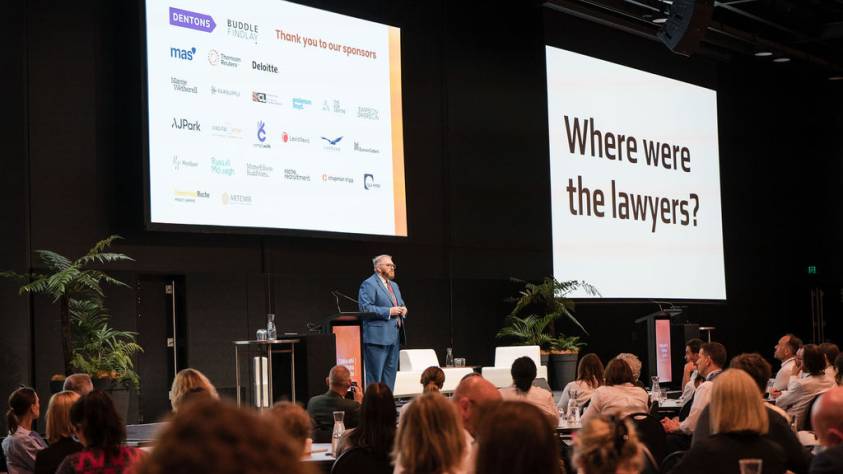
When commercial pressure collides with professional duty, how does a lawyer hold the line?

When I speak to in-house counsel, I often open with a broad question: Do you see yourself primarily as a lawyer, an in-house adviser, or a business partner?

It is a query that gets to the very core of professional identity. In research I undertook with Richard Moorhead and Cristina Godinho mapping the identities of hundreds of in-housers, the responses were telling. Forty-six per cent identify primarily as a solicitor or barrister, 40% as an in-house legal adviser, and the remainder see themselves as managers, subject specialists, or businesspeople. Yet, as one General Counsel candidly remarked, “If you begin to see yourself solely as a service provider then you miss one of the key reasons for having an internal legal function”. You risk swapping professional independence for organisational compliance, transforming the legal department from what she called a “bastion of assurance” into a mere “hired hand”.
As organisational landscapes become increasingly complex, in-house lawyers find themselves caught in what Richard, Cristina and I term the ‘tournament of influence’. It is an environment where organisational performance metrics, corporate and political hierarchies, and commercial drivers exert constant, subtle (and sometimes not so subtle) pressure on ethical boundaries.
Time and time again, in studies all over the world, we see lawyers talking about (and taking actions to make real) the zealous pursuit of their client’s interests. This extreme client-first lawyering treats the rule of law through a remarkably narrow lens, operating on the premise that legal professional rules exist only to facilitate a client’s aims.
To be clear, this is legally inaccurate. Lawyers in Aotearoa New Zealand have overriding legal duties as officers of the court. In Australia, their paramount duty is to the court and the administration of justice and, in England and Wales, professional principles which safeguard the wider public interest take precedence over an individual client’s interests. A client’s best interests sit among a constellation of other duties: to the court, the rule of law, the administration of justice, professional integrity and independence, and so on. See, in Aotearoa New Zealand, Section 4 of the Lawyers and Conveyancers Act 2006 on ‘fundamental obligations’ and Chapter 2 of the Conduct and Client Care Rules 2008.
For the in-house lawyer, the question of priority can feel especially sharp because the client is also the employer; the person who signs pay checks, reviews budgets, and controls career progression. Professional independence and integrity are necessarily challenged to varying degrees because of context and organisational environment.
When we look at the global landscape of scandals involving lawyers, we see the devastating human and social costs of a centring a client’s interests to the exclusion of everything else. Consider the Post Office Horizon scandal in the United Kingdom which saw 1,000 postmasters wrongfully prosecuted over 13 years, with hundreds sent to prison. The subsequent public inquiry revealed a pattern of in-house lawyer aggressive litigation tactics, improper approaches to prosecution, an adversarial dislocation with truth, and a lawyering infrastructure that treated systemic flaws as corporate risks to be legally managed away. Prosecutions, both professional and criminal, of the lawyers involved (in-house and in private practice) are almost certain to follow.
In Australia, the recent Robodebt and Crown casino scandals similarly suggest that some in-house lawyers become so deeply embedded in the institutional and commercial objectives of their employers to the point that professional independence is compromised; acting as mouthpieces and enablers rather than as gatekeepers.
We also know that in-housers have a difficult job to do. The data that Richard, Cristina, and I collected reveals a troubling reality: 32% of in-housers surveyed reported being asked to advise on a matter that made them feel ethically uncomfortable. Twenty-six per cent agreed that there are fundamental tensions between how they and their business respect obligations to uphold the rule of law. These findings are mirrored by the Solicitors Regulation Authority’s thematic reviews in the UK, where 10% of in-housers admitted their regulatory obligations had been compromised to meet organisational priorities, and five per cent reported explicit pressure to suppress information that conflicted with organisational goals.
This brings us to something that can sound abstract but is central to ethical in-house practice: the important fact that the rule of law is not self-executing. The rule of law does not maintain itself automatically through statutes, courts, or constitutional language alone. As work I did with Richard and Kenta Tsuda for the UK Legal Services Board makes clear, the rule of law depends on living agents; people within institutions and organisations who interpret, apply, defend, and sometimes resist exercises of power. Lawyers are among the most important of those agents.
The significance of this for in-house counsel is profound. Lawyers inside organisations are often present in those moments where legality, commercial pressure, political objectives, and/or institutional self-interest collide. The question is not simply whether lawyers facilitate transactions or manage legal risk. It is whether they exercise independent professional judgment in ways that support legality and the administration of justice, even when doing so is uncomfortable or costly. Here, our work for the Legal Services Board stresses that lawyers uphold the rule of law not just by advising on legal rights, but by counselling clients towards legality and challenging arbitrary or improper uses of power.
Sadly, there are no real ‘quick wins’ to the issues and pressures I have outlined. But there are some useful prompts alongside more practical things like reflecting on reporting lines, bonus criteria, agreeing role clarity with the CEO, helping the board understand the lawyer’s professional duties, ethical training, and avoiding isolation from one’s professional community.
We should not expect heroic purity of in-housers. Instead, what society wants and needs are lawyers who remain capable of reflection, independence, and moral courage within imperfectly human organisations. As one in-houser so powerfully told me when I asked him if he still thought of himself as a solicitor, “I do. Ultimately, I’m grounded, although I think like everyone else now you tend to call yourself a lawyer. But, yeah, primarily I think that’s my qualification and that’s what I do and that’s what I’m grounded in… Otherwise I’m just a highly paid commercial person and what’s the point of that?”