Sociologist Paul Spoonley introduces the “new” New Zealand – older, urban, fewer young people, fewer workers and greater diversity. These changes are reshaping the society that lawyers serve, the nature of the work and the expectations clients bring.
When I began studying population geography at Otago University in the mid-1970s, the book that was most influential was Paul Ehrlich’s Population Bomb which was published in 1968. The concern was that the degree of population growth would overwhelm the earth’s resources. Now, almost sixty years later, the key global concern is with the nature and impacts of depopulation.
Emeritus Distinguished Professor Paul Spoonley FRSNZ ONZM
American political economist Nicholas Eberstadt recently labelled what is happening as the “age of depopulation”, of major population decline in many parts of the world with some halving in size between 2023 and 2100. Aotearoa New Zealand is both something of an outlier in terms of demographic change; and in other respects, it is joining the rest of the high-income world but as a relative latecomer.
Inverting the population pyramid
This comprises two elements, the rapid ageing of the population combined with declining fertility. It is hard to miss the significant shift in the size and importance (fiscal, influence) of the Baby Boomers (born between 1945 and 1964) who are now reaching the age of 65 in ever growing numbers. When Paul Ehrlich was writing his book, the over 65-year-olds made up 8% of the population. They are now 18% of the New Zealand population and will continue to grow until a quarter of all New Zealanders will be aged over 65.
Many will still be working, some by choice, others because financial reality leaves little alternative. On current figures, 40% will be totally reliant on superannuation when they do retire. Another 20% will have some extra money, but not much. They will live longer than previous generations and will generally be healthier and active for longer.
At the other end of the age spectrum, the numbers being born in New Zealand are declining. At the end of the Global Financial Crisis (GFC), New Zealand was still at replacement rates for fertility (2.1 births per woman) but since then, there has been a rapid drop-off so that we are now 25% below the rate required to replace our existing population. The impacts are now being felt at the primary school level with a year-on-year decline of 4,000 fewer enrolled students. By 2032, there will be 30,000 fewer students in the education system.
The drivers for this are varied. Education plays a role. Across most professional programmes, including law, around two-thirds of university students are now female. Employment patterns also matter, particularly when combined with the financial and career costs associated with having children. Concerns about maintaining income progression, balancing career development, and environmental pressures are influencing decisions about family size. As a result, more people are choosing not to have children, delay parenthood, or adopt a “one-and-done” approach.
All this means that older age cohorts are now larger – and growing larger – than younger age cohorts, a complete reversal of the traditional pyramid shape. The implications are that the costs of an ageing society – superannuation, health care – will increase while those in the prime working ages and those working will decline meaning less income from personal income tax and fewer workers.
A 2025 Business NZ study estimated that New Zealand will be short of 250,000 workers by 2048. Many of our existing provisions and policies will not work – or work well – in this new demography.
We are already superdiverse – and we will get even more superdiverse
One of the few options to counter fertility decline – and depopulation – is to supplement a population by attracting and settling immigrants. New Zealand is one of the classic immigrant destination countries. Almost 30% of all New Zealanders were born in another country and this rises to over 40% for Auckland.
Since 1990, New Zealand has experienced four major spikes in arrivals and net migration gain. The last three occurred at the end of the GFC, just prior to COVID-19 travel restrictions and then again in 2023-2024, the last being the highest ever with a quarter of million immigrant arrivals and a net gain of more than 130,000.
The impact is already significant, particularly in the ethnic composition of younger generations. Over the past decade, the largest sources of migration to New Zealand have been India, China and the Philippines. While fertility rates among these groups are broadly similar to those of Pākehā, the demographic effects are substantial. Population projections have been revised upwards, and it is now expected that in the coming decades around one-third of New Zealanders will identify with an Asian ethnic group.
At present, about three-quarters of Asians living in New Zealand were born overseas. Over time, however, the proportion who are New Zealand-born and educated will grow. The values, expectations and perspectives this generation bring will help shape the Aotearoa of the 2030s and 2040s.
The values and ambitions of Māori are already abundantly clear. And here demography is destiny. Māori fertility is dropping but the combination of a much younger median age, younger mothers and more children means that the Māori population will keep growing. The Māori population will make up more than 20% of Aotearoa’s total population but at the under 15 years of age, they will comprise a third of the total. (When I refer to Māori in this context, I am talking of those who self-identify, not the descent population. These younger kohanga reo generations are much more immersed in their tikanga, their reo and their whakapapa links.
And then there is Auckland
A final but important aspect to our changing demography is the growth – and growth – of Auckland and the top half of the North Island. Often, the media focus on the percentage growth of Queenstown Lakes or Selwyn – and both are growing fast. But between 40 and 50% of all annual growth now occurs in Auckland.
Why? In recent years (2023-2024), 80-85% of annual population growth comes from net migration as fertility drops. The result is that immigration has become the major factor in population growth for most towns and regions. Currently, immigration numbers have dropped and as a result, a number of regions (Hawkes Bay, Nelson) are experiencing population decline and the only significant growth is occurring in Hamilton, Christchurch – and Auckland. Almost half of all population growth for the country now occurs in our major city.
The result is that over the coming decades, about three-quarters of New Zealand’s population will live in the top half of the North Island and 40% in Auckland. The corollary is that many regions and smaller towns are experiencing population stagnation (little or no growth) and depopulation is becoming more common.
A final note
Welcome to the “new” New Zealand: older, more urban, with fewer young people, fewer workers and far greater cultural diversity. These changes will reshape the society lawyers serve, influencing everything from the nature of legal work to the expectations clients bring to the profession. Some organisations are already planning for this future. Many others are not. For lawyers, the challenge is simple: to recognise that the country we practise in is changing, and to adapt accordingly.
Trends in the profession – from the Snapshot of the Profession 2025
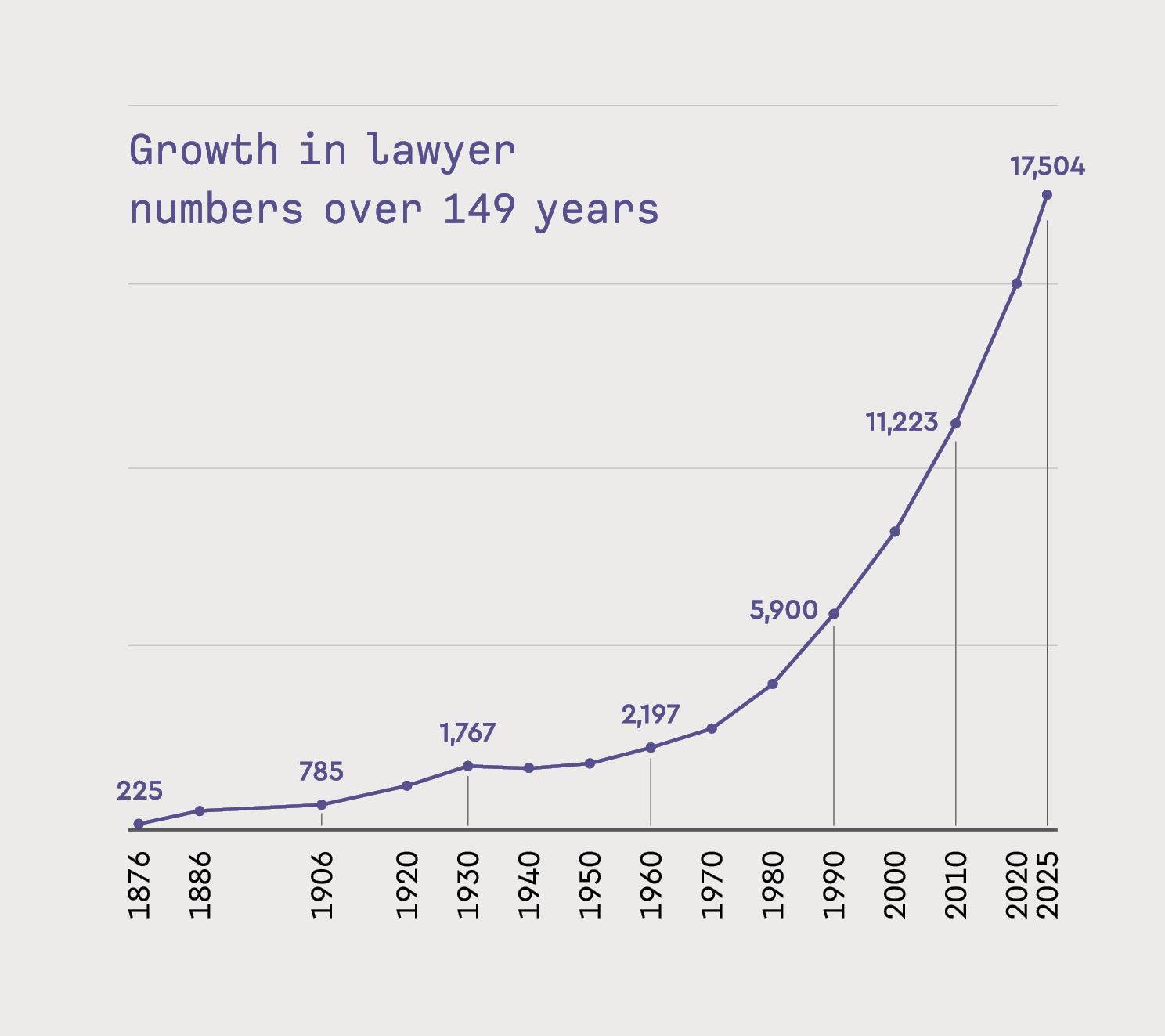
The profession has grown over the years since it was first established one hundred and fifty years ago. It has also become more diverse.
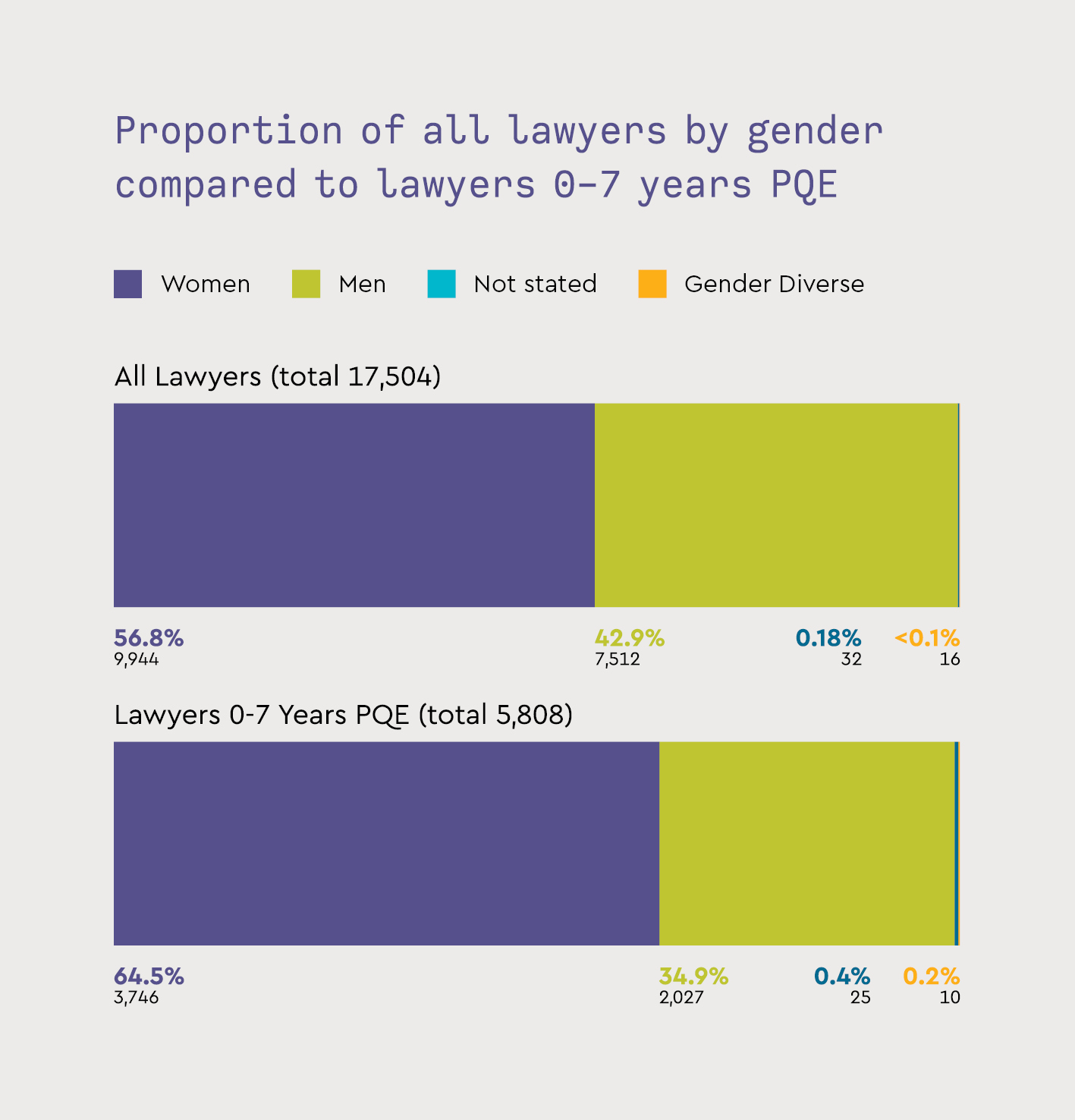
Female lawyers now account for more than half of the profession, something Professor Spoonley highlights as a common trend across professional roles. The proportion of women lawyers is largest in the 0-7 years since admission (PQE) cohort.
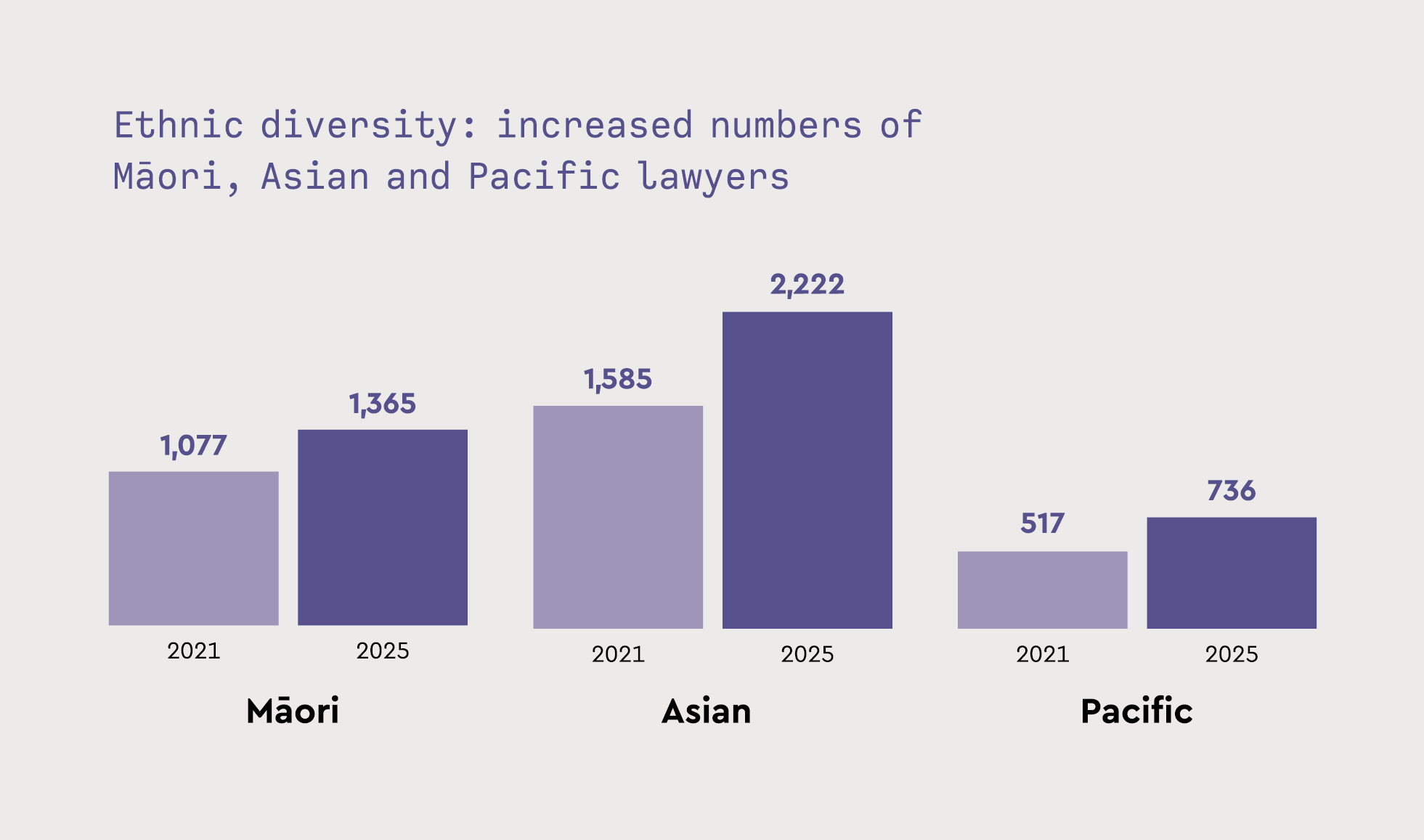
Since the end of June 2021, there has been a 26.7% increase in Māori lawyers, 40.3% increase in Asian lawyers, and 42.4% increase in Pacific lawyers. The increase in all lawyers over that time is 12.5%.
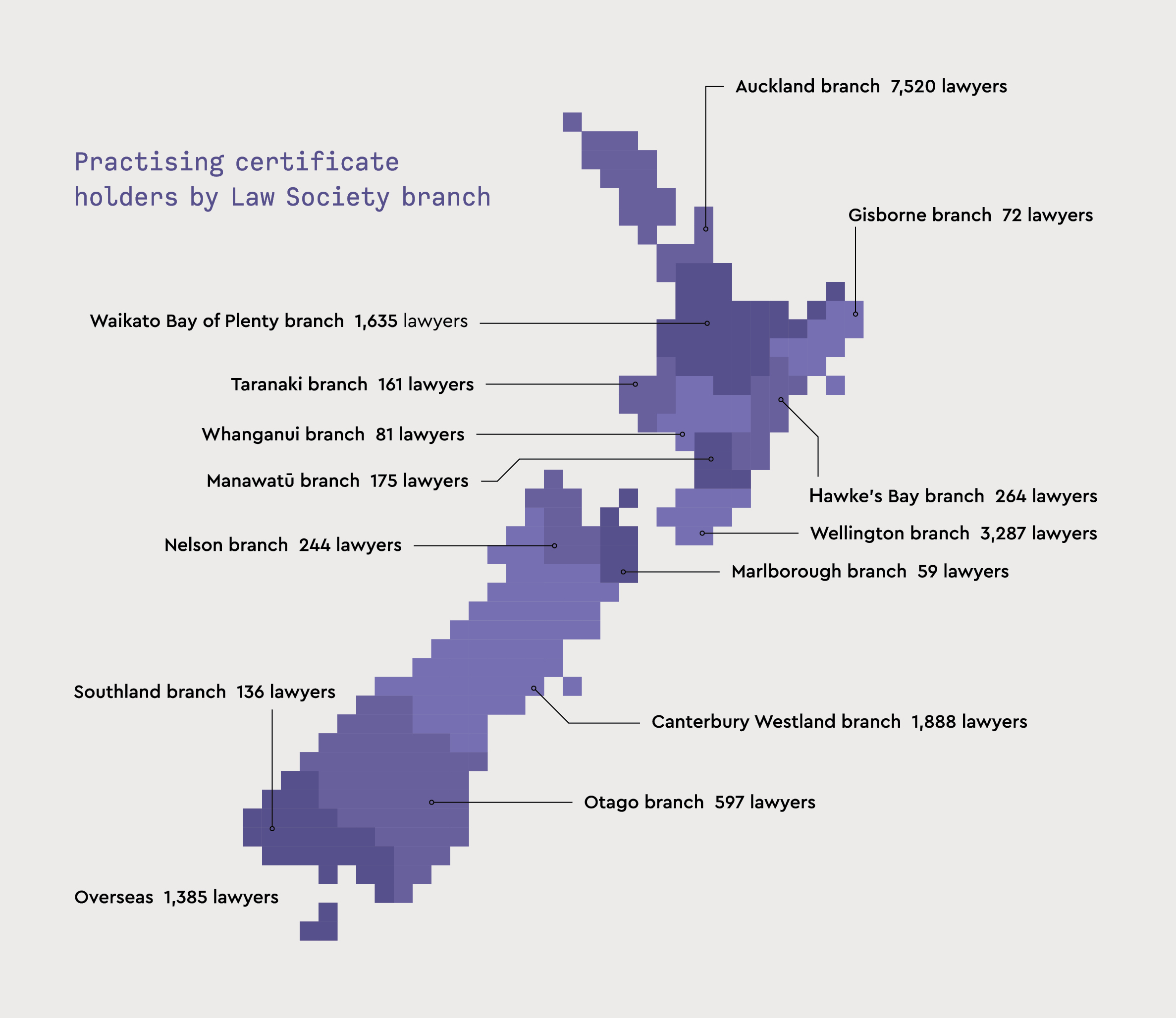
Professor Spoonley highlights challenges in changing demographics for Aotearoa New Zealand, including an ageing population and a shift to urbanisation. The map from the 2025 Snapshot of the profession shows the current geographic spread of lawyers with the Auckland branch the largest, followed by Wellington and Canterbury Westland.