Centuries of law - The international law of the sea
Barrister Elana Geddis takes a look at the oldest branch of international law – the ‘law of the sea’ – in the first of three articles examining whether international law has teeth.

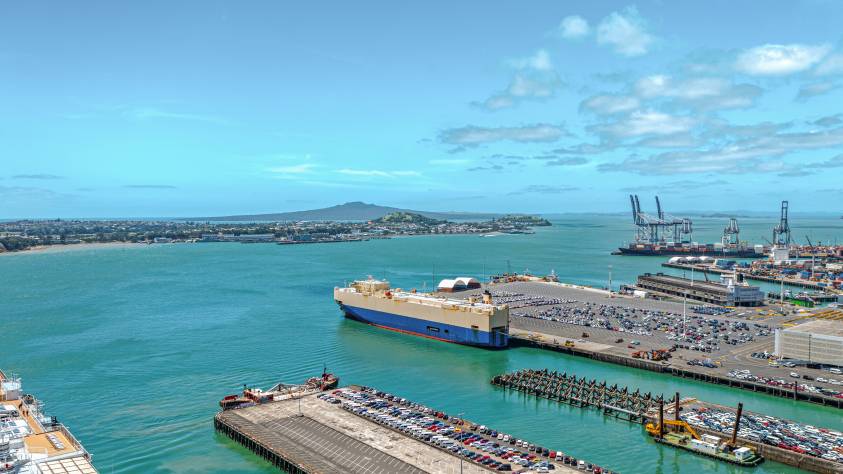
New Zealand’s ability to control fishing and oil and gas exploration in our 200 nautical mile exclusive economic zone. The number of lifeboats on board the cruise ships that visit our ports. The construction of the cargo ships that carry our exports to the world. All are underpinned by the body of rules collectively referred to as the “law of the sea” – the oldest branch of international law.
The cornerstone of the modern law of the sea is the 1982 UN Convention on the Law of the Sea (UNCLOS). Described as a “constitution for the oceans”, UNCLOS sought to regulate all uses of the sea and marine resources – including shipping, fishing, mining and scientific research. UNCLOS is supplemented by three implementing agreements focussing on mining, fishing, and high seas biodiversity. And it sits alongside a body of more detailed treaties, including specialist treaties addressing shipping and marine pollution.

UNCLOS was negotiated by states to serve their interests. So, it is hardly surprising that most of its rules are complied with most of the time. Where they are not, all 170 states that are party to UNCLOS have agreed to allow disputes to be submitted to the International Tribunal for the Law of the Sea (ITLOS), the International Court of Justice, or an ad hoc arbitral tribunal.
Over 30 cases have been dealt with under this dispute settlement mechanism. States have also used the advisory jurisdiction of ITLOS as a first step towards enforcement. In May 2024, for example, ITLOS issued an advisory opinion confirming that obligations to prevent marine pollution also require states to mitigate their greenhouse gas emissions.1 The International Court of Justice has reached the same conclusion2 – leading to speculation that a case may follow against states that have failed to take effective action to mitigate their emissions.
Dispute settlement can have a powerful effect even if a state is not successful in court. France ended its nuclear testing when faced with legal action by New Zealand (and others). And in 1999 New Zealand, together with Australia, sued Japan under UNCLOS for its illegal fishing of southern bluefin tuna. The case was lost on a technicality, but subsequently settled.
Despite its successes, however, dispute settlement between states will always be an incomplete enforcement mechanism. States are often reluctant to initiate a dispute for political reasons. Even when they do, it is not always easy to establish that an obligation has been breached – many rules are expressed broadly and at a high degree of generality. Where a breach is found, there is usually no way to ensure the ruling is followed. Further, not all states are party to UNCLOS (most notably the United States). And finally, because the law of the sea governs obligations between states, there is no equivalent mechanism for individuals to challenge non-compliance directly. Individuals are left to hold governments to account through whatever avenues are available in their domestic courts.
The Court of Appeal’s decision in Sellers v Maritime Safety Inspector [1998] NZCA 248, [1999] 2 NZLR 44 provides a colourful example of an individual doing just that. Mr Sellers, whose yacht was registered in Malta, objected in principle to the Inspector’s requirement that it be fitted with an emergency locator beacon before leaving port in New Zealand. In Mr Sellers view, carrying such a beacon interfered with his “religious” relationship with the sea. The Court upheld Mr Sellers’ appeal, finding that the Inspector must exercise his powers consistent with international law. That prevented him from imposing any equipment conditions on a foreign flagged yacht, except to the extent that those were permitted under international law.
In making the decision in Sellers, Keith J emphasised that:3
for centuries national law in this area has been essentially governed by and derived from international law with the consequence that national law is to be read, if at all possible, consistently with the related international law. That will sometimes mean that the day to day (or at least year to year) meaning of national law may vary without formal change.
Sellers is just one of many cases in which New Zealand’s international obligations have been central to the interpretation of legislation and accompanying statutory powers. Much of the power of international law lies in this domestic application. States may act internationally, but governments make their decisions domestically. And – as it has done for centuries – the law of the sea shapes, informs and constrains those decisions.
1. Request for an Advisory Opinion Submitted by the Commission of Small Island States on Climate Change and International Law, Advisory Opinion, 21 May 2024
2. Obligations of States in Respect of Climate Change, Advisory Opinion, 23 July 2025.