Learning, adjusting and responding effectively are core to delivering quality legal services. Read about why the ability to adapt and respond is a key component of a lawyer’s continuing professional development.
For lawyers, standing still is no longer an option. The pace of change in the legal profession is accelerating. From rapid legislative reform to new technologies and shifting client expectations, lawyers are increasingly required to adapt quickly and think differently about how they practise. In this environment, professional agility, the ability to learn, adjust and respond effectively, is becoming a key capability for maintaining competence and delivering strong legal services.
Agility and the role of a growth mindset
In a legal context, agility is more than simply responding to change. It’s the ability to adapt quickly and thoughtfully as circumstances evolve, remaining open to new ways of working, responding constructively to uncertainty, and adjusting one’s thinking or approach when the situation demands it.
Continuing Professional Development (CPD) plays an important role in supporting that adaptability. While CPD helps lawyers maintain their technical legal competence, it also contributes to the broader professional capabilities that modern practice increasingly requires. Lawyers value engagement in CPD to build resilience, self-awareness, and the confidence to navigate a rapidly changing legal environment.
One concept that underpins professional agility is the idea of a ‘growth mindset’. A growth mindset encourages openness to learning and a willingness to question established assumptions. It rests on the understanding that skills and expertise are not fixed, but can be developed over time through effort, feedback and reflection.
Lawyers who cultivate a growth mindset are more likely to approach new situations with curiosity rather than caution. Instead of focusing solely on the risks that can accompany change, they are more inclined to see opportunities, to strengthen their practice, expand their skills, and ultimately improve outcomes for clients. A growth mindset also helps lawyers recognise where further learning may be valuable, allowing them to plan their CPD in a way that supports their continued development.
Reflective practice: the foundation of meaningful CPD
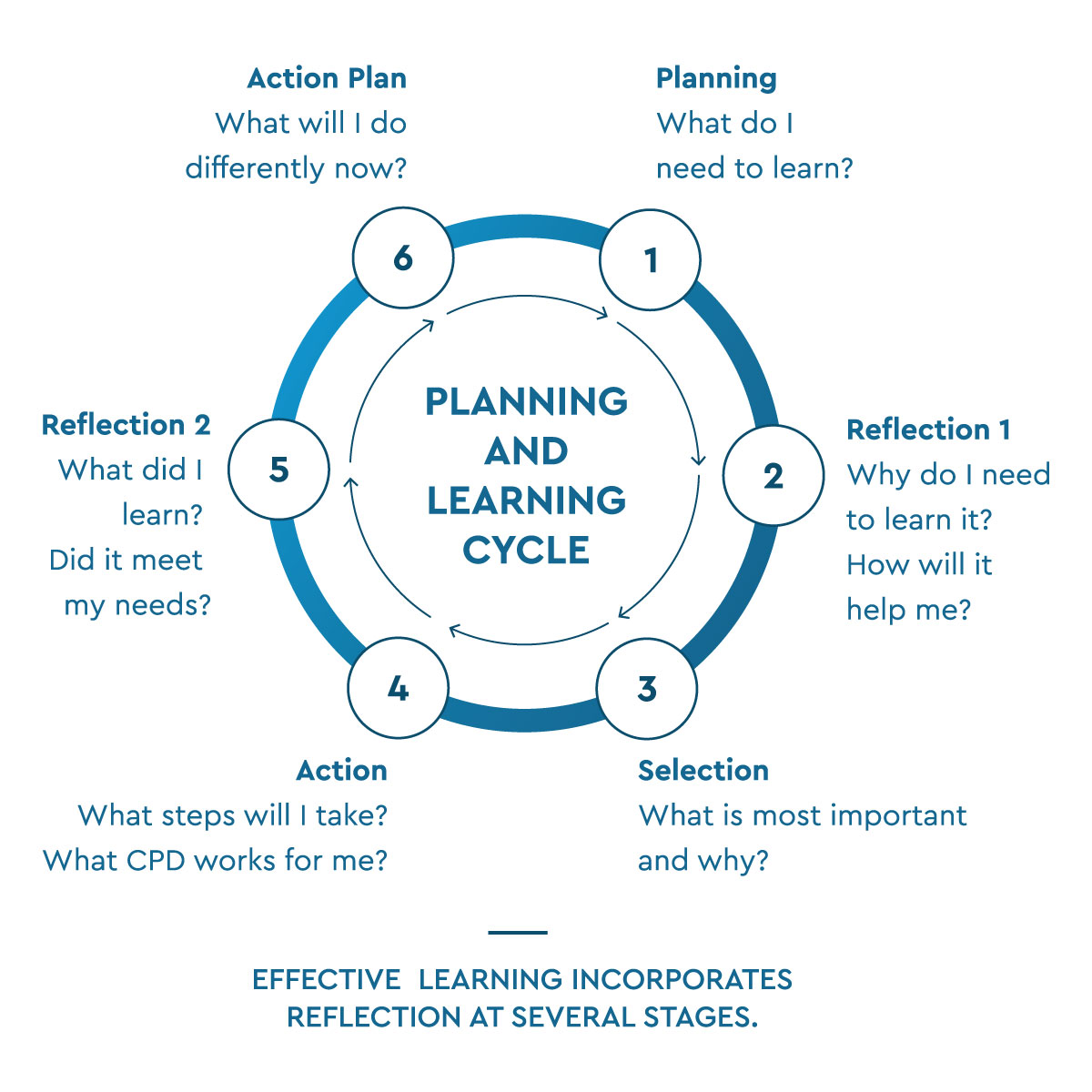
Reflective practice1 is the deliberate process of thinking critically about experiences and learning. It plays a central role in developing an effective CPD Plan and Record (CPDPR) and underpins the approach that many lawyers take for their ongoing development.
A lawyer’s CPDPR is where they record and reflect on their CPD activities. The rules for CPD are set in the Lawyers and Conveyancers Act (Lawyers: Ongoing Legal Education–Continuing Professional Development) Rules 2013 (CPD Rules). This includes the requirement to keep a CPDPR.
The CPDPR is developed and maintained by:
identifying and prioritising learning needs for the coming year
preparing an action plan
maintaining a record of activities
documenting attendance to enable verification
reflecting on the outcomes of participation and how it will improve practice.
By reflecting on past learning opportunities and day-to-day professional experiences, lawyers can identify areas of strength, gaps in knowledge and opportunities for further development. For example, a lawyer may identify that they need to learn more about AI in legal practice, or that a greater understanding of tikanga and its interaction with their specific area of practice would be helpful. These insights help inform the lawyer’s individual learning needs, ensuring CPD activities are purposeful, relevant to the lawyer’s current practice and aligned with their personal professional development needs.
This becomes part of the planning and learning cycle, where after participating in CPD activities, further reflection supports deeper learning.
Reflective practice naturally reinforces both agility and a growth mindset. This habit of pausing, evaluating and adjusting builds self-awareness and the belief that capability can improve over time, which is central to a growth mindset. Regular reflection helps lawyers become more agile through enabling them to recognise patterns, respond more quickly to new situations and make informed decisions about adapting their approach.
The role of reflective practice applied in a legal context, is discussed in a paper by Senior Lecturer and Discipline Lead for Law at Charles Sturt University, Haley McEwen in the Journal of the Australasian Law Academics Association, 2022, vol 15. The paper outlines how reflective practice supports technical legal competence across a lawyer’s career and also fosters adaptability, resilience and self-awareness.
By embracing CPD as an organic, ongoing, purposeful process lawyers can take ownership of their professional development. Doing so not only strengthens lawyers’ individual capability but also supports the delivery of high-quality legal services, ensuring the profession as a whole remains resilient, responsive and well-equipped for the future.
Looking ahead to the new CPD year
The new CPD year began on 1 April, making now the opportune time for lawyers to approach their 2026/27 CPDPR with a reflective lens. Taking stock of current practice, identifying areas for growth, and planning meaningful learning goals can help ensure professional development supports both competence and long-term career growth.
The Law Society has resources to support you with your CPD planning, including example CPDPRs and a CPDPR template which can be found on our website. We are happy to respond to enquiries if you want to understand more about the CPD requirements or you can look at our FAQs online.
CPD requirements for lawyers
The CPD year runs from 1 April to 31 March the following year
Lawyers must complete a minimum of ten hours of CPD activity each year
Lawyers who practised for part of the CPD year may be eligible for a pro rata reduction
Up to five hours CPD may be carried over from the previous year, where in excess of ten hours had been completed
Lawyers must retain their CPDPR for three years
Lawyers must declare their compliance with CPD rules annually
Lawyers will need to be able to show that they have participated in each CPD activity (verification)
1. The concept of “reflective practice” is based in John Dewey’s pragmatist account of experiential learning (How We Think, 1933) and Donald Schön’s systematic framework of reflection in action and reflection on action (The Reflective Practitioner, 1983). This concept continues to underpin outcomes focused CPD across professions.