New Zealand Law Society - Courts roundup 12 November - 18 November 2026

Decisions, proceedings and news from the courts in some common law jurisdictions in the past week.
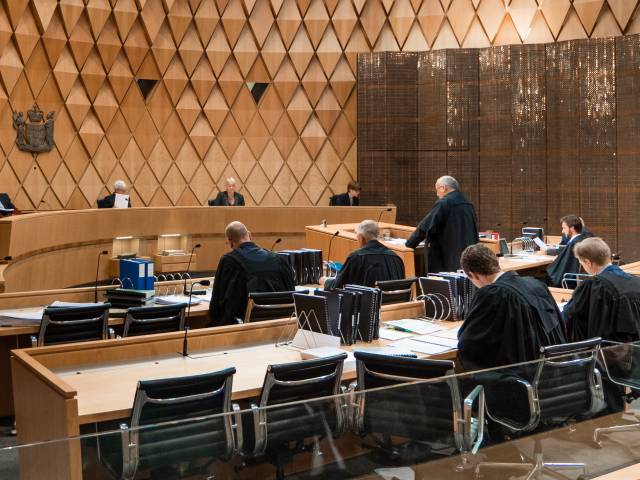
Jury v R [2026] NZSC 171 (11 November 2026)
Unsuccessful appeal (4-1) against conviction for murder – M, a suspect, made two inconsistent police statements and left a letter implicating J in R’s death – M died before trial – Statements admitted as hearsay under s 18(1)(a) Evidence Act 2006 – M had a prior conviction for attempting to pervert the course of justice but details were not adduced at trial – CA dismissed appeal – Judge must take a hard look at circumstances against dangers of hearsay – Threshold inquiry, not a general review of Crown case –
Availability of s 122 reliability warning did not affect admissibility (Glazebrook and Kós JJ, Winkelmann CJ) – Statements inadmissible (unanimous) – Second statement contradicted by CCTV evidence (majority) – Statements inconsistent – M had motive to lie and prior conviction – Circumstances provided fertile grounds for cross-examination – Reliability warning required and details of conviction should have been before jury (Glazebrook and Kós JJ, Winkelmann CJ) – Admission created real risk outcome affected, a miscarriage of justice under s 232(4)(a) Criminal Procedure Act 2011 (unanimous) –
Majority: error not fundamental, trial fair and sure of J’s guilt beyond reasonable doubt, so no actual miscarriage –
Appeal dismissed – Winkelmann CJ dissenting: trial unfair as evidence significant, conviction details withheld and no warning given – Would quash conviction and order retrial.
Lookman Family Trust v Williams [2026] NZCA 548 (9 November 2026)
Appeal challenging validity of deed of company arrangement (DOCA) adopted during administration of Design Electronics Ltd (DEL) – L, a judgment creditor and trustee of the Lookman Family Trust, placed DEL into liquidation and opposed a DOCA proposed by administrator W – L alleged parties who were not entitled to vote had improperly supported the DOCA and sought orders declaring it invalid and void – Appeal was moot because the DOCA had been terminated after filing of appeal and DEL had returned to the control of liquidators – Nevertheless, issues concerning voting rights in company administrations warranted determination –
Administrator entitled to admit a company as a creditor and accept its vote despite its prior removal from the Limited Partnerships Register – Upon restoration, a limited partnership was treated as having continued in existence as if it had never been removed and acts undertaken during deregistration are validated – Alternatively, any debt advanced while the company was deregistered was capable of supporting a claim by its general partner – Administrator had not erred in admitting proofs of debt from five counterparties to share purchase agreements under which shares had never been issued – Four agreements were valid and counterparties held contractual rights to receive shares – DEL’s liquidation without issuing shares amounted to repudiation of those agreements – Lodging proofs of debt constituted effective cancellation, entitling counterparties to claim as creditors – Administrator was entitled to estimate claims at the amounts advanced as restitutionary relief despite uncertainty as to ultimate recovery – Administrator wrongly included interest when valuing those claims because interest not founded on contractual entitlement or judgment debt was not provable – Appellants failed to establish that, absent the interest component, the DOCA was entered into contrary to pt 15A Companies Act 1993 – Any contravention would have been validated because statutory requirements were substantially complied with and no injustice resulted – Appeal dismissed.
Porter v Mulock-Houwer [2026] NZCA 545 (10 November 2026)
Application for stay pending determination of application for leave to bring second appeal in relationship property proceeding – P and M-H were in a de facto relationship that ended in 2019 – FC held s 44 Property (Relationships) Act 1976 (dispositions may be set aside) applied to P’s interest in a property purchased by his trust – Court ordered sale of property and ordered P to pay sum representing half the value and profit of a company whose operation had diminished the value of relationship property – HC dismissed appeal and subsequently declined leave to appeal and stay application –
Stay not warranted because proposed appeal would not be rendered nugatory if orders were implemented before determination of leave application – Balance of convenience did not favour continuation of stay – Central issue concerned extent to which value of the property was available to achieve a just division of relationship property – Sale of property appeared inevitable – No evidence an immediate sale would be imprudent or result in a substantial undervalue – While sale of property could create some disadvantage for P, continued delay would correspondingly prejudice M-H by depriving her of the benefit of judgments obtained in both the FC and HC – Proposed appeal did not appear to raise any significant error of principle – Both courts had applied orthodox relationship property principles to the issues in dispute – No apparent question of public or general importance arose – Application for stay declined.
Reed v Waikato District Council [2026] NZCA 544 (6 November 2026)
Unsuccessful appeal against HC decision striking out appellants’ claim for judicial review of District Council’s decision to grant resource consent on non-notified basis for construction of helicopter landing pad and hangar and operation of commercial helicopter business –
An encumbrance registered against title to property, prior to appellants’ purchase of that property, required encumbrancer to support encumbrancee’s undertaking of construction of helicopter pad and hangar and to allow encumbrancee and its business partners to undertake development and operations without interference, objection, opposition or restraint – Further covenants precluded making or supporting any objection to or submission opposing any application for resource consent or other authorisation facilitating development and operations, taking issue against or causing any delay to any such application, and bringing proceedings for damages, nuisance or interference arising from development and operations –
CA held encumbrance precluded appellants’ judicial review claim – Covenant 1 obligations were not confined to post-consent activities as definition of development and operations necessarily encompassed consent process because operation of business rested on a consent – Appellants’ judicial review claim seeking to quash consent on multiple grounds amounted to a prohibited objection under covenant 2 and in any event was clearly captured by prohibition on taking issue against or causing delay to any such application – Covenant 3 was not confined to tortious proceedings as damages are a remedy, nuisance is a tort and interference is an ordinary English term – Language of encumbrance was sufficiently clear to preclude judicial review notwithstanding absence of any express reference to it –
Encumbrance remained in force as resource consent runs with land under s 134 Resource Management Act 1991 and nothing in encumbrance suggested importance attached to identity of person applying for consent – Strike out upheld as covenant 6 providing for liquidated damages was enabling not exclusive –
Appeal dismissed.
Tatana v Chief Executive of the Department of Corrections [2026] NZCA 543 (6 November 2026)
Unsuccessful referral by Deputy Registrar to strike out T’s appeal under s 164B Senior Courts Act 2016 as plainly an abuse of process – Appeal brought against two HC decisions, refusing T’s fifth and sixth applications for writ of habeas corpus in respect of warrant to detain dated 17 June 2026 –
Between March 2025 and August 2026 T made 6 unsuccessful habeas corpus applications to HC – Judge earlier declined, by very narrow margin, to make a restraining order under s 166 Senior Courts Act, noting constitutional importance of writ, that T remained in custody on active charges, was self-represented and displayed some mental fragility, and had not yet been warned of the possibility of such an order – T’s application for leave to appeal an earlier habeas corpus decision to SC had recently been struck out as an abuse of process –
CA held threshold for finding that an appeal was plainly abusive was a high one and was not met – Notice of appeal identified an intelligible and coherent ground of appeal in form of a challenge to validity of the warrant to detain – Contained none of the threats or abusive allegations that had characterised some of T’s earlier HC applications – Appeal involved no apparent improper motive, no attempt to obtain a collateral benefit, and no relitigation of matters already finally determined – Apparent mootness of appeal and its lack of merit did not in themselves meet threshold – Procedural defect of naming Judges as respondents rather than Chief Executive of the Department of Corrections was remedied by substitution –
Appeal not struck out – Chief Executive of the Department of Corrections substituted as respondent – Scope of appeal limited to two decisions.
Hona v Māori Land Court [2026] NZCA 539 (5 November 2026)
Unsuccessful interlocutory application by H, self-represented, for orders directing production of unedited raw master digital audio recording of a Māori Land Court (MLC) hearing, permitting submission of recording to an independent digital forensic expert for verification, authentication and acoustic integrity testing, and pausing time for preparation of case on appeal until a forensic report was complete –
Underlying appeal on injunction orders made by MLC requiring H to remove a building and other objects from Māori freehold land at Taupō – HC granted H’s judicial review application in part, finding that the addition of a three month compliance timeframe to the written orders, in circumstances where H had not had an opportunity to be heard, breached natural justice and was unlawful – Injunction otherwise remained in force and was remitted to Māori Land Court for reconsideration of timeframe – H appealed on basis that injunction should have been set aside in its entirety and that Judge failed to rule on her allegation that audio recording had been manipulated –
CA declined interlocutory application on five grounds: – Appeal proceeds by way of rehearing based on HC record and audio recording was not before HC – Question whether Judge erred in not ruling on manipulation allegation did not require CA to independently determine whether manipulation occurred – Orders sought were essentially same as those declined in HC, which H had decided not to pursue by way of appeal – Recording could not establish anything material to appeal as central fact that no compliance timeframe was pronounced in open court was not in dispute – H’s own impression on listening to recording was not a sufficient evidential basis to justify requiring MLC to deliver up recording to a forensic examiner – Principle of equality of arms did not justify orders as recording remained available to all parties to listen to at a MLC registry –
Extension of time to file case on appeal granted – Interlocutory application otherwise declined.
AAM v Secretary of State for the Home Department [2026] EWCA Civ 1411 (4 November 2026)
Unsuccessful appeal against HC decision quashing refusal to recognise A as a potential victim of human trafficking under the Slavery and Human Trafficking (Definition of Victim) Regulations 2022 – A, a Syrian national, was abducted while travelling in Libya, detained for about 1 month, beaten and threatened, and forced to contact his family to secure payment of a ransom for his release – Secretary of State accepted the elements of transportation, harbouring, coercion and kidnapping but found no exploitation because A was not required to perform work or services – HC held that approach was too narrow and remitted the matter for reconsideration –
In a straightforward application of the “natural reading” of the Regulations, CA accepted that A’s experiences could fall within the trafficking definition – CA confirmed that the question was fact-specific and held that the Home Secretary had erred by failing to consider whether the circumstances of his kidnapping amounted to exploitation –
CA held reg 3(6)(d)(iii) was capable of encompassing kidnap for ransom where a victim is subjected to force, threats or deception designed to induce them to enable another person to acquire a benefit – Exploitation under the Regulations was not confined to forced labour or services and may extend beyond the minimum forms of exploitation identified in the Council of Europe Convention on Action against Trafficking in Human Beings – Whether kidnap for ransom amounted to exploitation was fact specific and depended on the circumstances of the particular case – Secretary of State erred by failing to consider whether A’s kidnapping and coercion to communicate with his family were designed to enable the kidnappers to obtain ransom payments and therefore constituted exploitation – Matter properly remitted for a lawful reconsideration of victim status (In the UK victims of trafficking are entitled to a support and recovery package) – Appeal dismissed.
Estate of Croft v MTH [2026] HCA 44 (11 November 2026)
Partly successful appeal against NSW CA decision entering judgment of $1.346M in favour of MTH (who was unrepresented) in a damages claim for sexual abuse against the estate of deceased foster carer GC – MTH relied on convictions obtained against GC in 2019 for 2 rapes and 3 indecent assaults committed against her while she was in foster care from 1979-1980 – Primary judge dismissed claim against estate after finding MTH not credible and incorrectly treating convictions as incapable of proving underlying abuse – CA allowed appeal and entered judgment for MTH, proceeding as if a certificate of conviction under the Evidence Act 1995 (NSW) (EA) had been tendered –
Primary judge erred in disregarding agreed evidence of GC’s convictions as proof of facts in issue – Exception in s 92(2) EA permitted convictions to be used as prima facie evidence of elements of offences and they should have been considered when assessing MTH’s case and credibility –
CA erred by determining appeal as if a s 178 certificate of conviction had been tendered when none existed in evidence – EA did not require convictions to be proved only by certificate and weight to be given to conviction evidence remained a matter for the civil court – Trial judges not obliged to ensure unrepresented litigants claim all available rights or advance all legal arguments – Because primary judge’s error materially affected fact-finding and credibility assessments, proper course was a retrial rather than judgment for MTH – Appeal allowed in part and proceedings against the estate ordered to be retried.
Farm Transparency International Ltd v Game Meats Co of Australia Pty Ltd [2026] HCA 42 (11 November 2026)
Appeal allowed in part against FCAFC decision declaring that copyright in images obtained through trespass was held on constructive trust –
FT, an animal welfare charity, trespassed 7 times at GM’s abattoir, installing hidden cameras and producing a 14 minute film – FT sent film to Commonwealth Department of Agriculture, Fisheries and Forestry (DAFF), Channel Seven, and briefly posted it online – Primary judge awarded $30,000 general and $100,000 exemplary damages but refused an injunction or constructive trust, finding no extreme or very serious damage – FCAFC declared the constructive trust, ordered assignment of copyright, and made ancillary orders consequent upon the trust, including injunctions and discovery orders –
HC found a constructive trust over copyright obtained by trespass is available in equity’s auxiliary jurisdiction, but should not be imposed where lesser orders can do justice between parties – Damages were inadequate as they did not address consequences of publication, and FT intended to harm GM’s business by publishing – A restorative mandatory injunction was available to rectify ongoing consequences of trespass – Constructive trust would only be a vehicle for GM to sue unjoined third parties, including DAFF and Channel Seven, risking freedom of communication and a multiplicity of proceedings – FCAFC erred by considering constructive trust before injunctive relief – Appropriate remedy was an injunction requiring FT to delete all images and copies, including any later acquired, with affidavit attesting to their permanent deletion or destruction, and an interim restraint on publication – Permanent restraint on publication and discovery order were unnecessary –
Appeal allowed in part – FCAFC orders set aside and replaced with deletion injunction.
Commissioner of Taxation v Merchant [2026] HCA 39 (4 November 2026)
Unsuccessful appeal by Commissioner and successful cross-appeal by M – Proceedings concerning application of Pt IVA Income Tax Assessment Act 1936 (Cth) (ITAA) to related-party transactions –
Merchant Family Trust (MFT) held shares in Billabong and Plantic – Following advice from Ernst & Young, MFT sold Billabong shares to related superannuation fund, crystallising a $56.6M capital loss, before related entities forgave about $54.4M of debts owed by Plantic – MFT subsequently sold Plantic to third party for about $85M – Commissioner determined Billabong share sale was entered into for dominant purpose of obtaining a tax benefit under s 177D ITAA and that the debt forgiveness schemes had substantially the effect of dividend stripping under s 177E ITAA –
HCA upheld finding that dominant purpose of Billabong share sale was to obtain capital loss and therefore ITAA applied under s 177D – However, s 177E did not apply to debt forgiveness schemes – Effect of a scheme for s 177E purposes was to be assessed by reference to the scheme itself and could not take account of subsequent Commissioner determination under s 177F ITAA cancelling the capital loss – Section 177E did not require avoidance of a substantial tax liability on a substantial proportion of accumulated profits, nor did it impose an essential quantitative threshold – Debt forgiveness therefore did not have substantially the effect of a dividend stripping scheme – Commissioner’s appeal dismissed and M’s cross-appeal allowed.